Two things about the eclipse of 2017 that I failed to mention in my previous post (http://timerskinephotography.blogspot.com/2017/08/a-hole-in-fabric-of-sky.html).
First, I didn't publish any pictures of the eclipse after totality because none of them turned out. When I did the second shot of totality, a wide angle one, I must have bumped the focus ring on my lens when I went back to full zoom. The Bailey Beads are just little fuzzy spots and the Diamond Ring is more like a fur collar. It was a stupid, frustrating rookie mistake. 😆
Second, after most everyone had departed the viewing area I noticed something both strange and wonderful: no trash. I looked the length of the viewing area. No bags or bottles or papers. There was one napkin in the grass, which from the looks of it and where it was, was probably there before we were. Everybody took out what they brought in. A Facebook post from the National Park Service rangers at Grand Teton National Park reported much the same thing happened there, too. They were gearing up for a huge mess and there was barely anything at all for them to pick up. Given the number of people they had there, this gives one a bit of faith in humanity, despite the current media-amplified voices of protest, counter-protest, and counter-counter-protest.

Saturday, August 26, 2017


Thursday, August 24, 2017
A Hole in the Fabric of the Sky
The total solar eclipse of 2017 crossed the US from Oregon
to South Carolina, a distance of about 2,600 linear miles. The path of totality, where the moon would
completely cover the sun, was 70 miles wide, making the entire area of totality 182,000 square miles, an area about 10% larger than California. Some 12 million
people live in that swath of land and millions more would travel to be there
when the moon shadow passed. The Missus and I were two of those itinerant
seekers of totality.
 |
| Path of Totality |
A small college town in southern Illinois (home of the
Southern Illinois University Salukis) was the city closest to the point of the
longest duration of totality. At a point a few miles southeast of there,
totality would last 2 minutes and 40 seconds. Carbondale, population 25,902,
was the place we wanted to be.
The eclipse was to happen on Monday, August 21. There were
some requests by the celestially obtuse to have the date moved. My friend Andy
from Wyoming reported a conversation with a dispatcher for the Wyoming Highway
Patrol. The dispatcher received a call from a woman who asked how Wyoming got
picked to host the eclipse and whether it wouldn’t be better to have it on the
weekend. Andy then quoted Winston Churchill: “The best argument against
democracy is a five-minute conversation with the average voter.”
But I digress. The eclipse was to happen on Monday, August
21. We were planning on driving from Columbus to Carbondale but life altered
our plans when we moved to Virginia. The drive from Cbus to Carbondale would
take 7 ½ hours. Completely manageable for us as we did that distance in early
2017, driving to LeClaire, Iowa to see bald eagles. But relocating to Richmond,
Virginia (transplanted from Cbus to RVA) made the drive time an untenable 15+
hours. So we booked passage on Delta Airlines from Richmond to St. Louis and
rented a car (hired a car, for those readers who are subjects of the Crown) for
the 2-hour drive southeast to our target area. Well before any of this happened
though, I knew I had to reserve a room early. Like a year out, generally the
maximum in advance individuals can make reservations. Because I had not put
this on my calendar I started looking for a room 48 hours late, but still, a
full 363 days ahead of the eclipse. My tardiness was nearly lethal for our
plans: there were no rooms available in Carbondale.
 |
| "I may be drunk, Miss, but in the morning I will be sober and you will still be ugly." |
A quick consultation with Google Maps showed another town
nearby. Marion, Illinois (population 17,193) is about 10 miles east of
Carbondale with a state highway connecting the two. After trying three hotels
in Marion, we managed to get a room at the Hampton Inn, one of only four left
for the event. It turns out that staying in Marion was more than a little lucky
(more on this later).
We arrived in Marion on Saturday, about 48 hours before the
eclipse. We wanted to use the time to explore the area and, more importantly,
scout viewing locations. This was a really crucial point on our agenda as the
news reports of how many people were going to descend on Carbondale itself
(hundreds of thousands) made being in the town itself undesirable for
crowd-haters like us.
I should note here that the staff at Hampton Inn – Marion
was really ready for this. The lobby was filled with all manner of literature
and brochures about the area and eclipse-related activities, well above and
beyond what you would normally find, including state highway maps from Illinois
Department of Transportation. All guests received a gift bag that had eclipse glasses (legitimate ones, not cheap rip offs), a local eclipse guide,
created by the staff, detailing local activities, places to eat, etc. It also had snacks –
moon pies, sunflower seeds and Eclipse gum. Well done, Hampton Inn – Marion.
Well done.
There was a lot going on in Carbondale to attract multitudes
besides 2:40 of totality. A three-day eclipse science show at Southern Illinois University was being put on by an uber-geek's Dream Team of NASA, Chicago’s Adler Planetarium and the Planetary Society. The Weather Channel had reporters scattered across the
path of totality, but it dropped two into Carbondale. One of them was Jim
Cantore, their resident master of disaster. NOTE: If Cantore ever shows up in
your town in foul weather gear, leave. Now. Seriously, don’t ask any questions, just GTFO
and don’t look back.
 |
| Jim Cantore, Meteorologist |
 |
| Jim Cantore, Very Bad Sign |
Further reading on the eclipse showed that Carbondale was the self-proclaimed town closest to the longest totality but that the actual point of greatest totality was 10 miles southeast of town, in Giant City State Park (GCSP). This spot was pretty much equidistant from Marion as the crow flies, but Carbondale got the jump on the closest town claim.
We found on our scouting expeditions that GCSP was preparing
several designated viewing areas and girding their loins for an unprecedented
deluge of visitors. Armed with good maps and great senses of direction, we set
out to find an alternate route into the park to avoid the obvious route in from
Carbondale. We found two routes in that would normally take a lot longer, but
would likely bypass most of the vehicular congestion and wind up being quicker.
And then we saw it. Both of our alternate routes into GCSP
took us through a portion of Crab Orchard National Wildlife Refuge, and just a
couple of miles past the Refuge’s visitor center was a wildlife viewing area.
It was perfect. It was on a minor state road, had wide open spaces for viewing,
a small but paved parking lot, large grassy areas for setting up our spot (and
my camera rig), and most importantly, a Porta-Potty™. If we were going to be there
for several hours, this was a must. This viewing area, honoring a long-time
volunteer, became Plan A. The designated viewing areas in GCSP became Plans B,
C, D, and E. If all these failed, the hotel parking lot was Plan F.
 |
| Our Spot was Plan A, Plans B-E were west-northwest of the Point of Longest Totality, Plan F was next to the Walmart. |
On the day of the eclipse we awoke at 5 a.m. The start of
the eclipse was at 11:52 a.m. Central Daylight Time…it was E-minus 6 hours, 52
minutes. We had some fruit for breakfast, packed our locally-purchased
Styrofoam cooler with our locally-purchased sandwich fixings and water and
headed out. Then we stopped, headed back into the hotel, and got some liquid methylxanthine
CNS stimulants (coffee). Armed with that, we actually hit the road. It was 6
a.m. and the sky was just starting to lighten. We got to the Crab Orchard NWR viewing
area 15 minutes later. We were the second car there and backed into the spot we
wanted on the far side of the parking lot. E-minus 5 hours, 37 minutes.
Other eclipse watchers trickled in. The next people to show
up parked next to us. John and Cathy (or Jon and Kathy, or some such) were from
Cambridge, Ohio, about 70 miles east of Columbus. Later, a gentleman in a
bright, shiny red Chevy Silverado parked in the grass on the other side of us.
Bob was a really nice guy from Rock Island, Illinois. We chatted with our
neighbors all morning. By the time the eclipse started, there were nearly 100
people in the viewing area that had fewer than 10 parking spaces. Everybody
else was parked on the grass.
The eclipse watchers in the viewing area were from all walks
of life, all ages, creeds and colors. Everyone was happy, friendly, excited and
anxious for what was about to happen.
I set the alarm on my cell phone to go off at E-minus 1
minute and again at the minute of totality. When reveille (or as it is labeled
by my phone, army_wake-up_bugle) sounded loudly, people nearby looked at me.
“One minute!” I shouted. I could hear the message get passed down the line in
both directions. People began donning their solar glasses and getting into their
viewing positions. The half-dozen photographers there, myself included, had
already dialed in their focus and exposures but we all now cozied up to our
camera eyepieces, made final positioning adjustments to our tripods and waited
for the first glimpse of the moon.
 |
| It has begun. |
Just as I thought I saw the sun’s curvature start to flatten
at the 1 o’clock position, the guy three cars away with an outrageously good
solar telescope shouted, “There it is!” Thus began the Solar Eclipse of 2017.
Everybody watched in amazement as the moon began to cover more and more of the sun’s surface. Even knowing the mechanics of what was happening – you know, the moon is moving between the earth and the sun – it was still a thing of wonder.
About an hour into the moon’s transit things around us began
to change. It had happened gradually but the light was now noticeably
different. To me, it was as if I was wearing polarized sunglasses. Everything
was still brightly lit, but there was a blue-gray tinge to the light. With
sunlight still streaming down onto them, there was no longer any glare coming
off of the parked cars. Even Bob’s shiny Silverado failed to shine. The other
thing that happened was that crickets started to chirp. They kept that up for
about 20 minutes before they decided they were too confused for mating rituals
and shut up.
It was at this point, where 70% to 80% of the sun was
obscured, that ancient civilizations in the path of an eclipse had to be utterly
freaking out. They couldn’t see a cloud in the sky and it yet was getting dark
and the temperature was dropping. There weren’t any ophthalmologists to warn
them against looking at the sun, so they would have looked up to see the sun
disappearing. How frightening that must have been for them. Cultures across the
globe and across the millennia have developed different responses to eclipses,
including making as much noise as possible to warn the sun of its impending
doom.
In 585 BC, it was the sixth year of a bloody, brutal war
between the Kingdoms of Medes and Lydia in what is now Anatolia in Turkey.
Right in the middle of a battle in May of that year a solar eclipse occurred. Everybody
agreed it was an omen. They dropped their weapons, exited the field of combat
and immediately declared a truce. A solar eclipse is more powerful than one’s
bitter hatred of a mortal enemy.
At E-plus 1 hour, 27 minutes, approximately one minute before
totality, light began fading rapidly. It was as if somebody had put the sun on
a dimmer switch and was twisting it fast. That was something I hadn’t read
about and was startled by it.
At E-plus 1 hour, 28 minutes the last glint of the sun’s
surface was enveloped by the moon. Totality had come to Crab Orchard. With so
many things to look at that we had never seen before, the next 2 minutes and 40
seconds went by much too fast.
First and most obviously, there was the sun’s corona. Even
the clearest, most vivid pictures of it don’t convey how truly awe-inspiring it
is to see the thing hanging in the sky. And the center is so dark, so
completely black, that it appears that a hole has been cut in the fabric of the
sky and surrounded by a silvery mist.
 |
| Totality |
The other thing to see and marvel at was the 360o
sunset. The horizon was lit with colors of sunset…frosty pink, pastel orange
and midnight blue. Seeing this all the way around instead of just to the west where
you normally see it was beautiful.
Then there was the sound of the people. Gasps, oohs and
aahs, laughter, happy chatter, cheering and shouts of joy, and that was just
me! Reactions were quite varied. Some people found it to be magical, some
mystical. Some people prayed, others simply wept at the astonishing beauty of
the event. Regardless of their reaction, everybody was just overwhelmed by what
they were experiencing and trying their best to express it to each other.
160 seconds later it was over. The end of totality was
announced by the appearance of Bailey’s Beads, where beads of sunlight began to
peek from between mountains on the moon’s surface. This was followed rapidly by
the diamond ring where most of the coronal ring is still visible but a large
burst of sunlight emerges on one side, creating the look of a diamond ring.
The process of darkening towards totality reversed itself,
with the dimmer switch being twisted in the other direction for about a minute,
returning Crab Orchard to polarized light and then gently increasing. By E-plus
3 hours, 5 minutes, Luna had completed her transit of Sol.
It was at this point that having lodging in Marion was shown
to be one of the luckier things to happen. A half million people were estimated
to have gone to Carbondale and they were all trying to go home, with most of
them apparently trying to get to the nearest interstate on-ramp, at I-57 in
Marion. Had we been staying in Carbondale it would have taken hours to go the
10 miles or so. As it was, we were able to take back and side roads to avoid
the crowds. Getting to Crab Orchard NWR took 15 minutes; returning to Hampton
Inn took 20. From the comfort of our hotel room we were able to watch the
traffic from Carbondale not moving towards I-57, which was at a standstill. In
20 minutes, the same amount of time it took us to get back, a semi
tractor-trailer moved the length of one semi tractor-trailer.
I wish that I could better convey the feelings of
exhilaration of experiencing totality (and really, you don’t just see it, it is
experienced). Since the discovery of what causes eclipses countless poets,
writers, philosophers and musicians have experienced totality and none of them
have been able to adequately communicate the experience through their tools. So I don’t feel
too bad about my incapacity in this case, just a little disappointed.
I think
perhaps the best way to convey the experience is to tell you to seek out the
next one. On April 8, 2024, just a little more than 6 ½ years after I write
this, a total solar eclipse will once again traverse the US. It will travel
from Texas up to Maine. Cities like Dallas, Indianapolis, Cleveland, Buffalo,
Rochester and Montreal will be in the path of totality. Interestingly, it will
once again cross southern Illinois. And that’s where we will be…in “our spot”
at Crab Orchard National Wildlife Refuge.
My pictures of the eclipse can be found in my Flickr account: https://flic.kr/s/aHsm71PdM6
Sunday, June 26, 2016
In the Summer of My 14th Year
{Note: I write my posts using Word then copy and paste into the blog. I wrote this back on January 2nd, saved it and forgot about it.}
In the summer of my 14th year (I’ve always wanted
to use that style opening but have never had the chance)…anyway, as I was
saying, it was sometime early in June when I was 14. I was out of school for the summer (cue Alice Cooper), having somehow
survived my freshman year of high school.
One day, Dad said he’d like to go to see a movie over the weekend. Mom and I said that sounded like a good idea
and we suggested we should go to the earliest showing on Sunday, knowing
already which movie we were going to take in: A
Bridge Too Far.
A Bridge Too Far
had been getting a lot of good reviews and the previews I had seen before other
movies looked like it was fairly realistic.
The movie was based on the book of the same name by Cornelius Ryan, who
had another great WWII book-movie combo in The
Longest Day. Indeed, A Bridge Too Far was probably one of the
most realistic depictions of combat until 1998 when Tom Hanks saved Private
Ryan and set a new standard in realism.
But when we arrived at the now-defunct Showcase Cinemas on Secor Ave.
Dad said, no, he didn’t want to see A
Bridge Too Far. He wanted to see
another one, one that neither Mom nor I had heard of and didn’t even sound
interesting. I got insistent – whiny,
really – that I wanted to see A Bridge
Too Far. The previews were cool and
it wasn’t going to be in the theaters much longer… this was when home VCRs were
still a few years in the future and if you missed it in the theaters, too bad. Dad said no, and he used his definitive,
end-of-discussion tone.
For those of you who never had the opportunity to meet James
Thomas Erskine, he was a bit larger than life, or at least, as large as
life. He had a certain presence about
him. It wasn’t commanding, but you
always knew when he was in the room. You
also have to understand something about his decisiveness. It was…well…decisive, and pretty much
final. He was a professional firefighter
and a Lieutenant on the Toledo Fire Department.
When you’re in that position, you have to be able to rapidly assess and
take control of a chaotic situation and start calling the shots. When you do, you have to give clear,
unambiguous orders. Moreover, you damn
well better be right because you are sending or leading your people into harms
way, in a way that few people outside public safety services can truly
fathom. Sadly, even when you are clear,
unambiguous and right, things
sometimes go very, very wrong. Dad’s
decisiveness, while not intransigent, was rarely compromised, and that held
true at home, as well.
I was heartbroken that I wasn’t going to see the movie I
wanted to see and was going to have to spend 2 hours watching some stoopid
movie Dad wanted to see. As Dad bought
the tickets, Mom and I had a quiet sidebar conversation. She wanted to see A Bridge Too Far, too, and she had also not heard of this movie to
which we were about to be subjected. We
both thought it odd that this WWII combat veteran who was fascinated by all
things WWII combat was seemingly uninterested in a really good WWII combat
flick.
When the movie was over, we emerged from the theater into
the familiar warmth of the bright summer sunshine. Chronologically, it was only about two and a
half hours after we entered the cinemas.
Physically, we were still on Secor Ave. in Toledo, Ohio; we were still
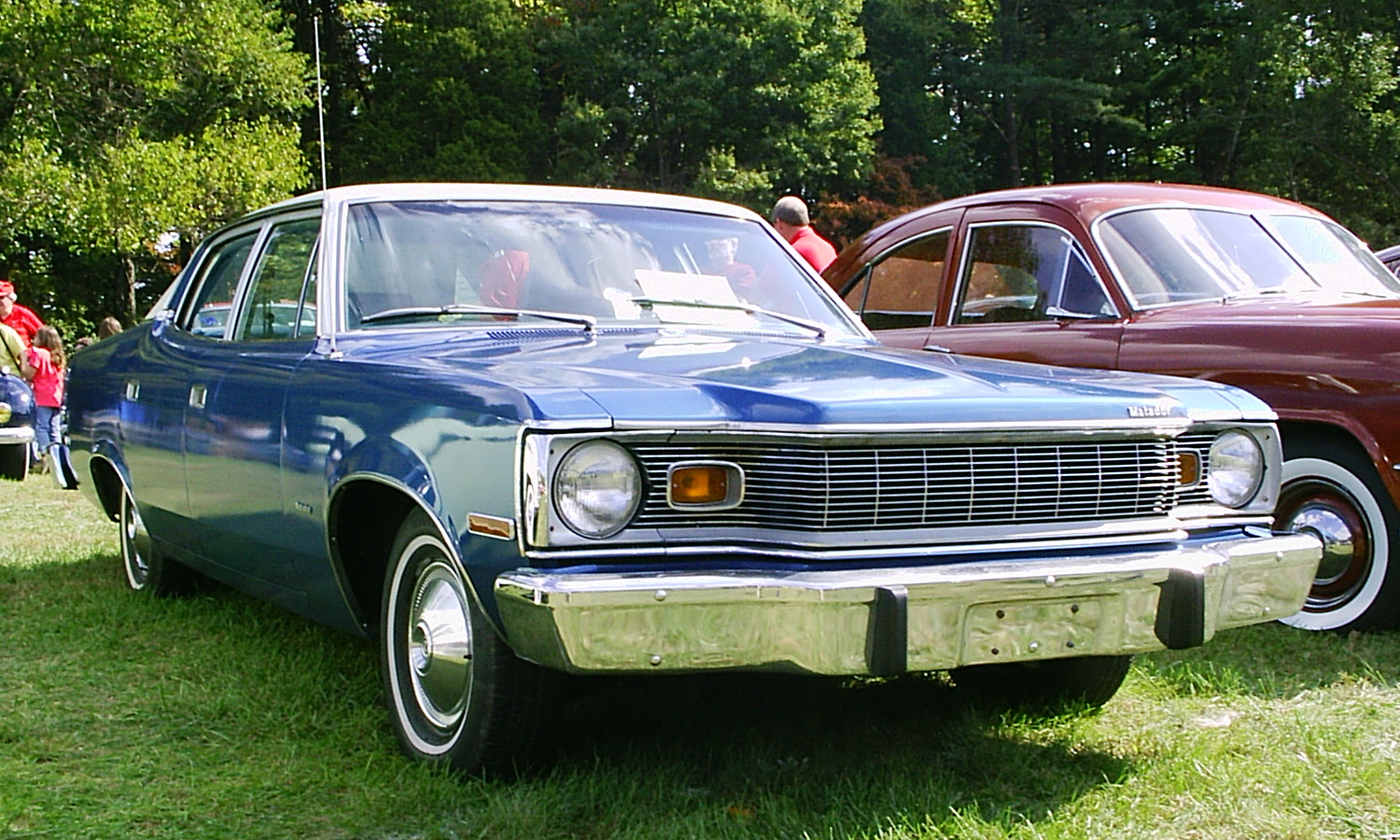
driving a 1974
AMC Matador to our home at 568 Colima Drive; they were still my parents and
I was still their son. But the universe
as I knew it had changed. An astonishing
magnitude of change. Completely and
irrevocably.
In those 121 minutes in the theater I witnessed things that
only a few people up to that point had.
Forces of good and evil, battling for supremacy using both swords and
spaceships. Creatures of impossible form
– dozens of them – intermingling with humans and each other. Sentient computers, some able to create
holographic messages. My 14-year old
brain was wracked by how real it all was and how much I admired my new heroes
and reviled a new set of villains (and let’s not forget one young lady’s really
nice figure and jiggly breasts, giving me, or at least lending to, my penchant
for brown-eyed brunettes).
The year of my 14th summer was 1977 and the movie that Dad wanted to see and that Mom and I had
never heard of was, of course, Star Wars.
There are bigger Star
Wars fans than me. But there are few
who were born after 1970 who will understand how profoundly that movie changed
things for those of us who went in to see it with no knowledge of what we were
about to see. Those born later will have
had some exposure to light sabers, R2-D2, C3PO, the Millennium Falcon, etc.,
through extensive merchandising. Kind of
like people born after 1990 are considered ‘digital natives’ and have no idea
what life was like before the internet.
These musings of astonishing changes to the universe were
brought about by seeing Episode 8: The
Force Awakens. I’m glad that the acting was
solid, even if the story was a bit derivative.
After seeing Episode 1: The
Phantom Menace, I left the theater thinking that the acting was so utterly
horrid that I wouldn’t being shelling out any more cash to subject myself to
it. And I didn’t. I never went to see the 2nd and 3rd
episodes, and only caught parts of the 3rd at home when Brian was
watching.
To illustrate my disgust and disdain for the abysmal
directing of some very good actors, I had the following conversation on
Facebook with one of my friends:
Me: I knew that it wasn't worth a
second look when I left the theater thinking that the best actor in the whole
movie was Yoda.
KD: R2-D2 carried every scene that
he was in.
Me: What?! No way. He was sleep
walking through his lines! I have it on good authority that he was hitting the
oil bath between every take and his reflexes were almost a microsecond slow
through the whole shoot.
KD: He was the only professional on
the set! (I heard Liam Neeson asked him for some pointers.) Those ugly rumors
about him hitting the oil bath were spread to cover up the fact that he was
calling his agent, trying to get out of his contract.
So anyway, the series seems to be back on track and all is
well in the post-1977 universe.
May the Force be with you.
Thursday, January 28, 2016
Simultaneous Responsibilities
The person who occupies the Oval Office has a lot on his or
her plate (or should I just use the now-acceptable genderless singular pronoun
‘their’?). We all know that this person
is “The Most Powerful Man Person in the World” but what does that
entail?
We know what the big, overall issues are. The economy, foreign affairs, defense, taxes,
etc. But these are complex, interwoven
issues that are made up of a near infinite number of smaller issues that range in
size from personal issues to ones of global scope.
To deal with these things, the federal Executive Branch is
headed by the President and aided by his Cabinet Secretaries. Established in Article II, Section 2 of the
Constitution, the Cabinet's role is to advise the President on any subject he
may require relating to the duties of each member's respective office. The
Cabinet is divided into the following Departments:
- State
- Treasury
- Defense
- Justice
- Interior
- Agriculture
- Commerce
- Labor
- Health and Human Services
- Housing and Urban Development
- Transportation
- Energy
- Education
- Veterans Affairs
- Homeland Security
The President also directly oversees, among others, the
Environmental Protection Agency, Office of Management and Budget, US Trade
Representative, US Mission to the United Nations, Council of Economic Advisors
and the Small Business Administration.
Having a Cabinet means the President, thankfully, doesn’t
have to be an expert in all of these things, which is good because nobody can
be. But the duties of the Chief
Executive requires them to be at least conversant in all of these areas because
the direction in which those Departments head is set by the President.
Despite being “The Most Powerful Person in the World” the
direction in which the President takes the country is constrained by the
Legislative Branch. Congress writes the
laws that govern the country and it’s the Executive Branch’s job to administer
those laws – to execute them, hence,
the name.
There is frequent dialog between the Legislative and
Executive branches. The lawmakers
sometimes need the executive’s overall perspective when writing laws, and
sometimes the executive sees a need for a new law or a revision to an existing
law. There can be a lot of give-and-take
and deal-making, but sometimes this works out well for both sides and as a
result, the American people benefit.
This never makes the news because why should good governing be covered
by the media? It’s when the legislative
and executive viewpoints are at odds with each other that we hear about
it. The media seem to love the political
and bureaucratic catfights and pissing matches.
The process takes time and the more rancorous it is, the more time
consuming it is. The President may not
be directly involved in those negotiations but still has to direct them.
With all of these areas of oversight, here a very small sample
of the specific issues that the President must deal with:
- The federal budget
- Money laundering by organized crime
- Bank regulation
- Fish hatcheries
- Highway safety
- Outer space
- Children’s television
- Phone service for the disabled
- Internet service for the disabled
- Phone and internet service for the rest of us
- National forests
- Puerto Rico: Nation? State? Leave it where it is somewhere in between?
- Indoor air quality
- Outdoor air quality
- Oil spills
- Fracking
- Groundwater
- Coastal water
- Water resource development
- Tariffs
- Tax-free retirement plans
- Civil service pay reform
- Major crime
- Minor crime
- Moderate crime
- Price fixing
- Immigration
- Science, technology, engineering and math education
- Vocational education
- All other education
- Job training (which is not part of education)
- Public health
- Personal health
- Family planning
- Head Start for when the family planning doesn’t work out
- Nutritional labeling
- Aging baby boomers
- Social Security
- Aging baby boomers bankrupting a Social Security system that didn’t foresee a Baby Boom
- Rural development
- Urban development
- Suburban development
- Energy
- Utilities
- Interstate commerce*
Notice that I only listed domestic issues above. The President is also given the duty of
conducting foreign affairs by the Constitution.
There are 267 “world entities” according to the CIA World Factbook. How the United States of America deals with
all of them, friend and foe alike, and how it reacts to how they deal with each other, rests on the shoulders of one person.
To imagine how complicated this task is, let’s use just one
example: North Korea. Global
intelligence think tank Stratfor describes North Korea’s global strategy as
being three-pronged: ferocious, weak and crazy.
There are no right answers to North Korea, only less bad ones, but the
three prongs guarantee that it’s impossible to really tell which ones those are. Whichever wrong answer is selected – and it
will always be wrong – the President of the United States selects it.
And then what do you do when two friends have a significant
problem with each other? We like Turkey
and we like Greece, but they do not like each other and have some serious
issues over Cyprus. India and Pakistan
constantly tussle over Kashmir, occasionally getting into skirmishes and even small
wars over it. But they now both have
nukes. In 1982, two allies went into an all-out
declared war when Argentina invaded the Falkland Islands and Great Britain
said, “Oh, I don’t fucking think so.”
So all of this, all of these decisions, and much, much more rests
in the hands of the President of the United States of America. Sometimes the responsibility to make a history-altering
decision occurs at the exact same time as all the ones I’ve listed above. And here’s the hell of it: ALL of these
decisions MUST be made. The President
must provide an answer to each and every question. Some answers are easier, and some decisions
are less important, but the President can’t walk away from any of these
questions. Ever. Even if you don’t like the questioner.
Are you reading this Mr. Trump?
*List adapted from fellow native Toledoan P.J. O'Rourke's brilliant attempt to explain government, "Parliament of Whores"
Saturday, January 23, 2016
Somatic Battlefield
The day before yesterday, that would be Thursday, I woke
with a minor, one-sided sore throat. As
I got ready for work it subsided and became barely noticeable after I had my
usual coffee from UDF. I get their Jack’dUp Java, for maximum effect. I figure
that if I’m going to drink something unpleasant for its stimulant effects, best
to get the most of it.
As my workday progressed the symptoms of a cold also
progressed. My sinuses began to ever so slowly swell. Not enough to need mouth
breathing but enough to notice. The sore
throat didn’t come back but my voice started to change, getting huskier, deeper. I was at a committee meeting at the Hospital
Association and over the course of four hours I went from sounding like me to
sounding like Morgan Freeman. Not a bad
thing, really, if you feel good while it’s happening, which I most definitely
didn’t.
When I got home and dinnertime rolled around, I wasn’t
hungry – you’ve seen me and know this isn’t a good sign. The Missus and I were going to meet Brian at
the Rusty Bucket for dinner. Shelagh
went on her own as I wanted to avoid being a latter day Typhoid Mary. I had probably done enough damage. I took some cold medicine and went to bed.
At 0 dark-thirty my alarm went off. My throat was on fire, my sinuses were closed
my muscles were sluggish and my head ached.
I had also developed a mildly productive cough. I got up, took the dogs out and then fed
them, hoping the symptoms would subside again.
They didn’t. I called off work for
the day.
Between naps – there were three – I sat around, all
bump-on-a-log like, trying to muster the energy to at least read
something. I failed miserably. Some people will question why I called off
work because as far as they can tell that’s what I do in my office every
day. Perhaps. But at home I got to stay in my pajamas,
something that Governors, both Republican and Democrat, frown upon in their
employee’s attire.
I ached all over, felt toxic and couldn’t string two
thoughts together. But as evening
approached, I began to feel a bit better and managed to fix myself a bologna
sandwich for dinner. I watched a RedWings hockey game and then went to bed.
I woke up this morning in significantly better shape. I’m still not well but at least I’m functional. As I fixed a bowl of oatmeal for breakfast I
thought, “Yay, white cells!” This got me
thinking about the body’s immune system.
It’s an incredibly complex thing.
The more you learn about it the more amazing it gets.
The immune system is actually a large, complex set of
systems, arranged in a layered defense.
It starts with physical barriers.
Your skin prevents bacteria, viruses and fungi – germs – from entering
your body. The shell of an egg does the
same thing for the developing embryo. Other physical barriers include coughing,
sneezing and watering eyes to physically expel invaders. Enzymes in saliva and tears, and stomach acid
(which also contains enzymes) break down germs before they can enter the body. Mucous snares germs, preventing them from
getting to any cells.
If the germs make it past the physical defenses there are
many layers of response from your body.
One of the most important is the production of white blood cells called
leukocytes. There are many types of
leukocytes, including B cells and T cells, with T cells coming in ‘Killer’ and
‘Helper’ varieties. Killer T cells do
just what the name says – they kill infected cells. Helper T cells sort of orchestrate the body’s
immune response. They’re kind of like a
forward observer directing artillery fire.
A war was being waged inside my body. Something, probably a virus, had evaded the
physical barriers and set up shop, taking control of some of my cells for the
nefarious purpose of propagating itself.
My body’s immune system responded, saying, “Not on my watch!” and opened
fire. My ability to perform normal
activities of daily living was diminished because energy was being diverted to
the immune response, just like wartime rationing (which is why rest is crucial
when you’re ill).
When I woke this morning I knew the tide had turned and that
I was going to win. Skirmishes and mop
up operations will continue for a couple of days, but my immune system will
prevail over the somatic battlefield.
Subscribe to:
Posts (Atom)